If you're weighing up Totango – or side-eyeing your renewal – you've probably run into the same wall as a lot of teams. Customer success platforms promise to stop churn in its tracks, then quietly assume you have an ops specialist on hand to keep everything configured.
You end up buying workflow automation when what you actually need, first, are clear health signals.
That awkward space, between spreadsheet-based tracking and heavyweight enterprise platforms, is where early-stage teams often stall. You need to quickly spot which accounts are drifting toward churn and which are primed for expansion.
Instead, full-blown customer success platforms bring:
- Weeks of implementation.
- Ongoing playbook upkeep.
- And dedicated ops headcount to constantly tune scoring models and automation rules.
This guide is designed to help you dodge all that.
We've broken down Totango alternatives by company stage, operations capacity, and budget – so you can match platform complexity to where your team actually is, not where an aspirational org chart says you should be.
Why teams look for Totango alternatives
Workflow-first approach requires established processes
Totango automates customer success processes through playbooks and scheduled sequences. You can trigger email campaigns when accounts hit specific health thresholds, assign tasks to CSMs based on customer behavior, and run multi-step onboarding journeys with conditional branching. This workflow-first approach works well for teams with mature processes and the operations bandwidth to build, maintain, and tune them.
But most teams assessing alternatives aren't after more automation to configure, they need visibility into which accounts need attention.
When you're an early-stage company under 50 employees – typically Seed to Series A – the priority is spotting risk before investing time in workflows. At this stage, the founder or revenue lead is still talking directly to customers. A playbook that drip-feeds three emails over two weeks isn't as big a deal as having a clear signal that Account X hasn't logged in for 10 days, so you can act on it today.
Automation requires full-time operations
Workflow platforms like Totango don't run themselves. Someone has to decide what "healthy" actually means for different customer segments, set up and manage automation sequences, tune scoring models as the product evolves, and keep playbooks updated when processes inevitably change. That "someone" is usually a customer success operations specialist, and they don't come cheap (we're talking six figures a year to manage this kind of platform complexity).
Smaller teams rarely have dedicated ops capacity to spare, and without it:
- Workflow platforms quietly turn into expensive dashboards no one tends.
- Playbooks built during implementation gather dust.
- Health scores drift away from reality.
- And automation rules fire too late, too early, or not at all.
Why Totango's health scores miss accounts drifting toward churn
Health scoring is meant to flag risk before a customer cancels. In practice, Totango's approach introduces blind spots that let churn sneak through:
- Accounts marked "healthy" still cancel because scores average lagging indicators like NPS, which is often collected only a few times a year.
- High login volume hides power users who are struggling to complete meaningful workflows.
- Opaque scoring erodes trust when CSMs can't explain why a score changed.
- Setup takes weeks or months before alerts are genuinely useful.
- Ongoing configuration demands specialist ops resources most teams don't have.
When the dashboard says "green" and the customer churns anyway, confidence evaporates. The reality is Totango's scoring is working, but the model needs constant configuration and upkeep that small teams can't realistically maintain. In the end, you get health scores that look impressive but miss the signals that actually predict churn.
Totango alternatives organized by stage and operations capacity
The customer success platform market tends to sort itself by team maturity and ops capacity more than shiny feature lists. The key is choosing a platform that fits how you operate today, rather than solving for the version of your team you're hoping to become next year.
Enterprise platforms for large customer success teams
Gainsight
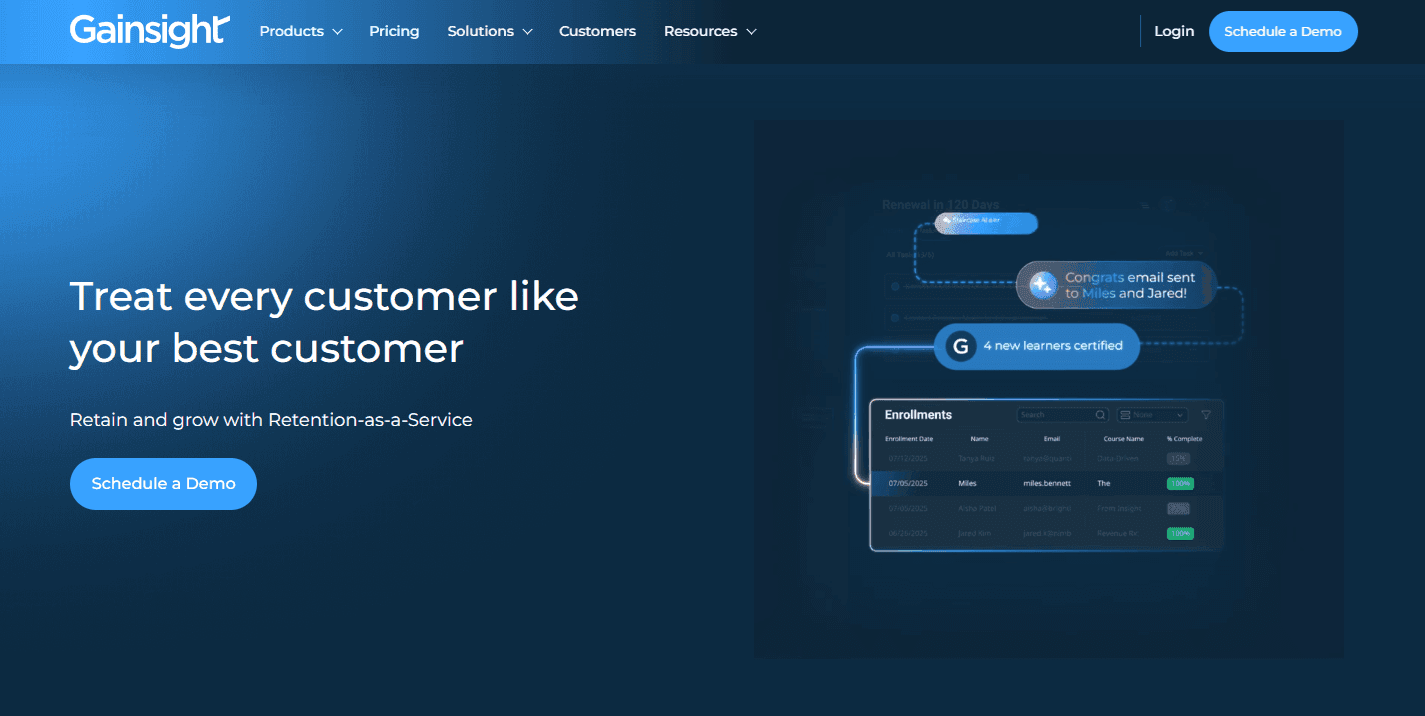
Gainsight is an enterprise customer success platform built for large organizations with specialist platform admins and well-defined processes. It delivers deep health score customization, hierarchical account structures, and robust governance controls.
Implementation typically runs from weeks to months and often requires professional services. Many companies also end up hiring dedicated Gainsight administrators, with salaries north of $100k a year, just to keep things running smoothly.
Gainsight assumes a mature CS Ops function and a long setup runway. Compared to Totango's faster deployment and modular SuccessBLOCs, it offers more depth but far more overhead, making it a poor fit if you're a 20-person team looking for simpler Totango alternatives.
ChurnZero
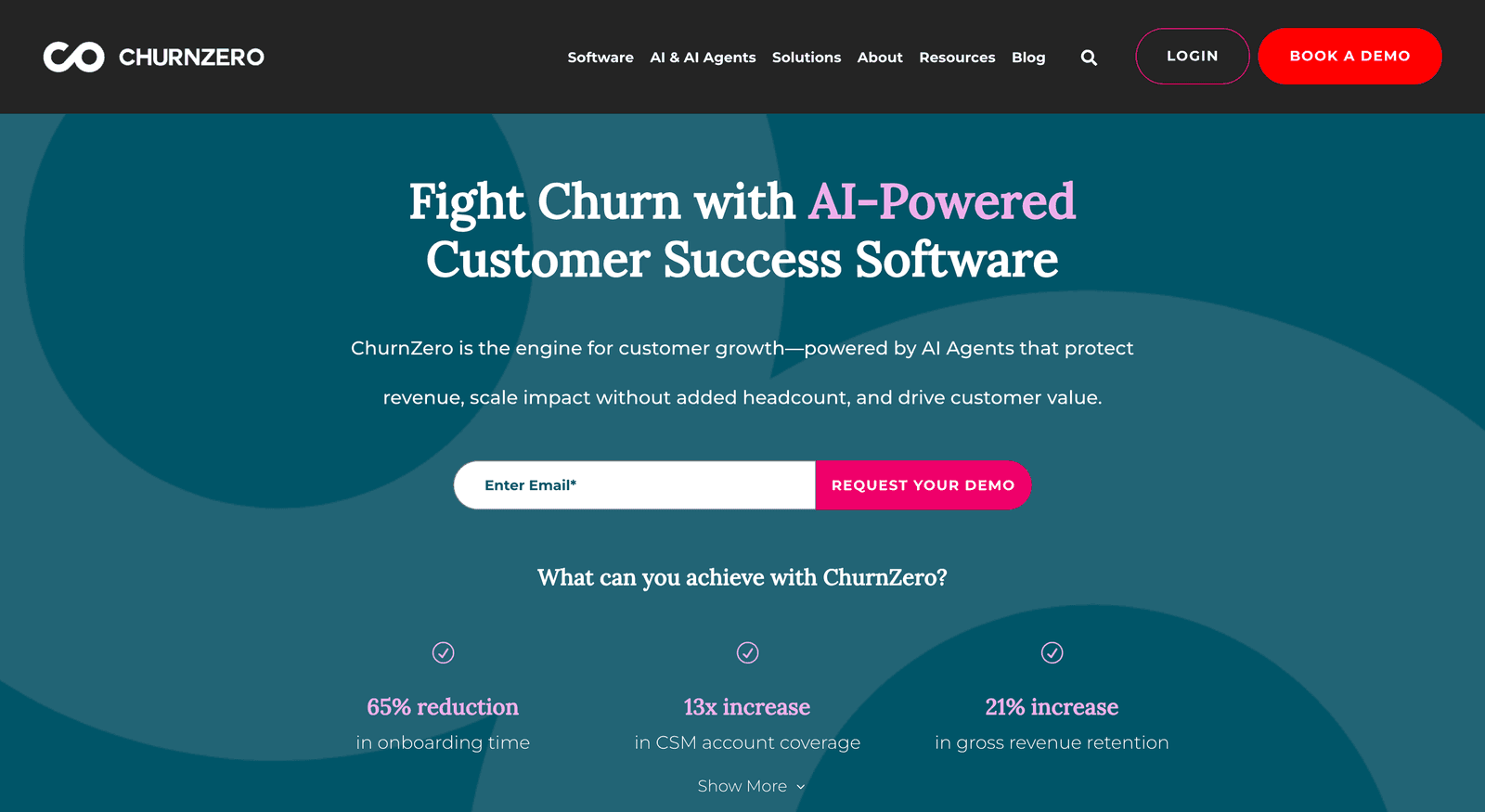
ChurnZero is a customer success platform for SaaS businesses with a strong focus on retention. Built for teams with established CSMs and Salesforce-first operations, it offers solid product adoption tracking and highly customizable health scoring for churn prediction.
Its deep Salesforce integration supports automated playbooks triggered by health changes. ChurnZero stands out for churn modeling, with unlimited health score models that can be tailored by customer segment without platform constraints.
Pricing is available on request and it's positioned firmly in the mid-market to enterprise SaaS space with dedicated ops teams. Reddit users frequently note that both ChurnZero and Totango feel overly heavy for startups with fewer than 50 employees.
Mid-market platforms for scaling teams
Planhat
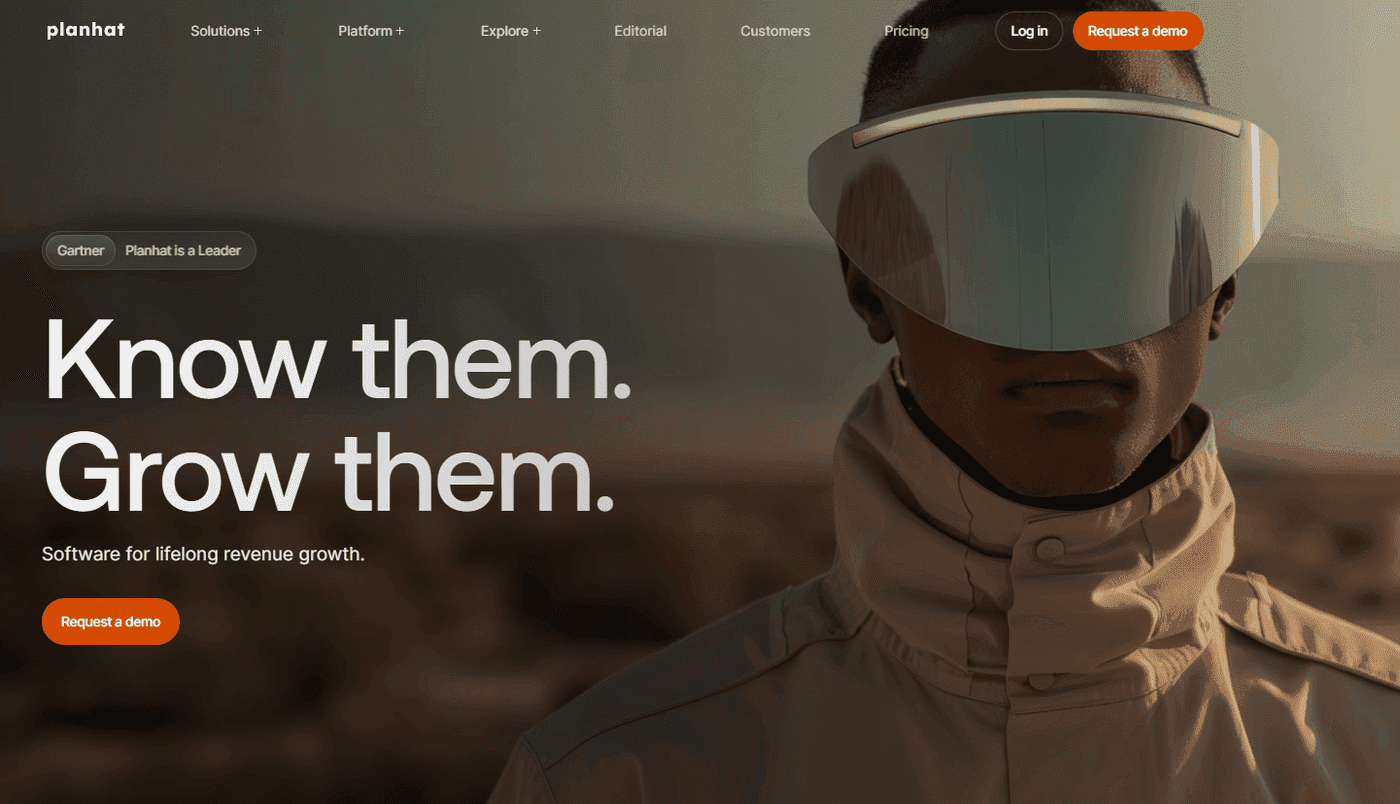
Planhat is a customer success platform aimed at data-driven teams that want flexible reporting without enterprise bloat. Its interface is often praised for being easier to set up than larger platforms, and its pricing – based on customer volume rather than seats – can work well for larger CS teams.
It includes workflow automation and customer portals without tipping into complexity overload. Pricing is available on request, and it's best suited to companies with established but still-scaling customer success functions.
Vitally
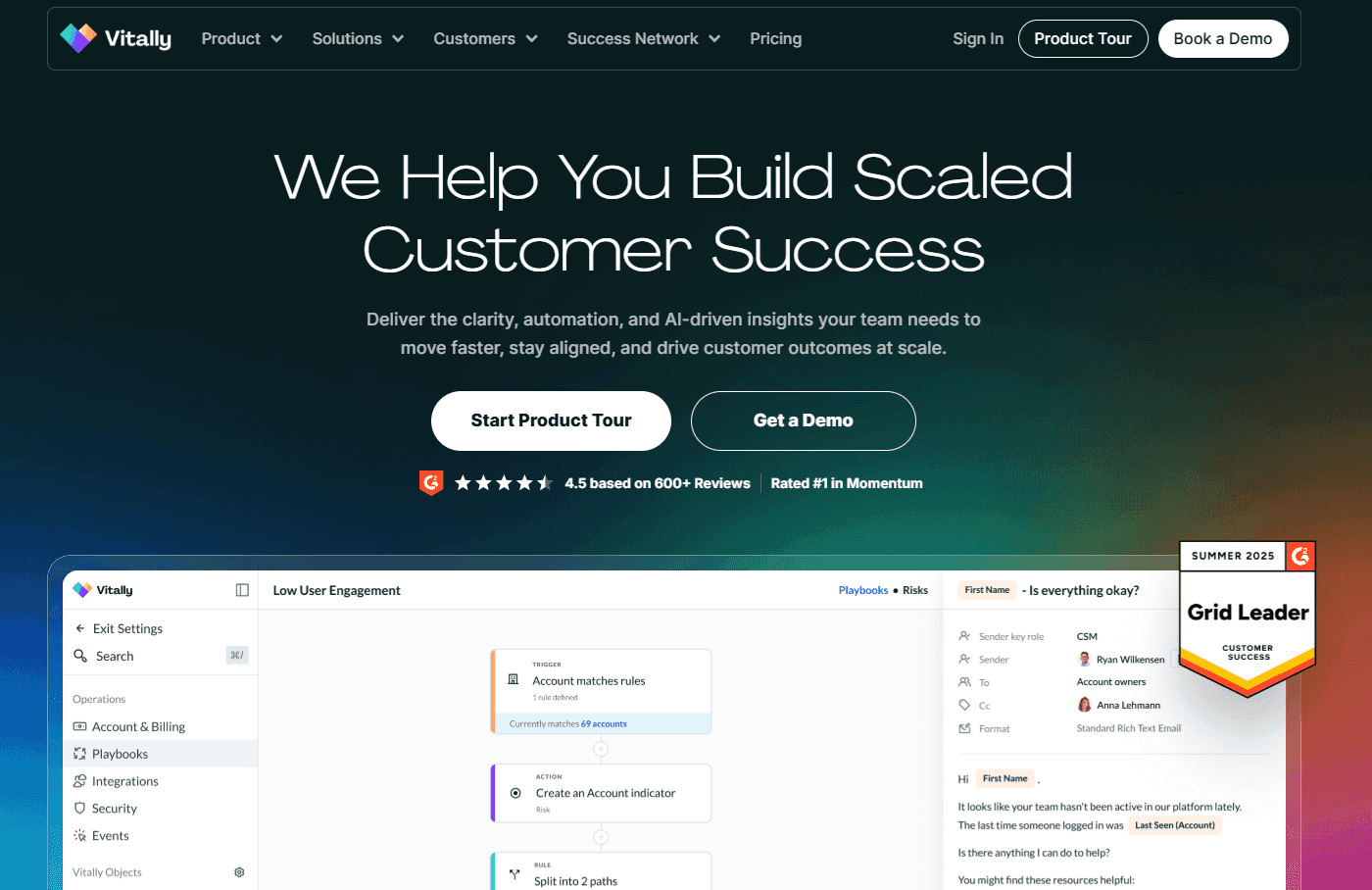
Vitally is a customer success platform built for product-led teams focused on usage data. Known for quick deployment, you can expect an intuitive interface with clear, logical navigation.
The platform works best if you're already tracking in-product behavior through analytics tools, bringing together product usage, CRM data, and support conversations within a single customer view.
That said, it still expects a baseline level of ops maturity. You won't be buried in weeks of setup, but someone does need to manage health score weighting and keep automation rules in check.
Custify
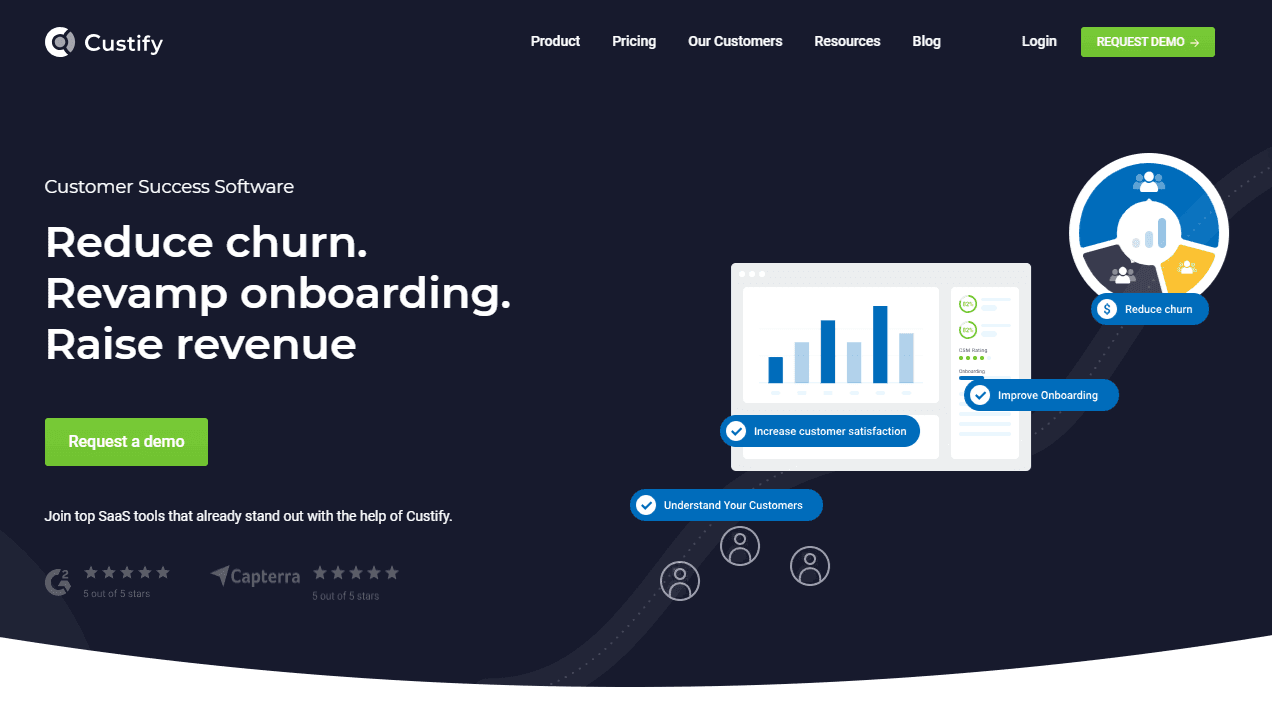
Custify is a customer success platform designed for lean teams that want automation up and running fast. Built for rapid setup with minimal configuration, it targets small to mid-sized CS teams that want essential features working without fuss.
You get straightforward health scoring and workflow automation without enterprise baggage. With lower barriers to entry than platforms dependent on professional services, Custify suits teams graduating from CRM-only customer success. Pricing is available on request.
Early-stage options for teams without operations staff
CRM modules (HubSpot, Salesforce)
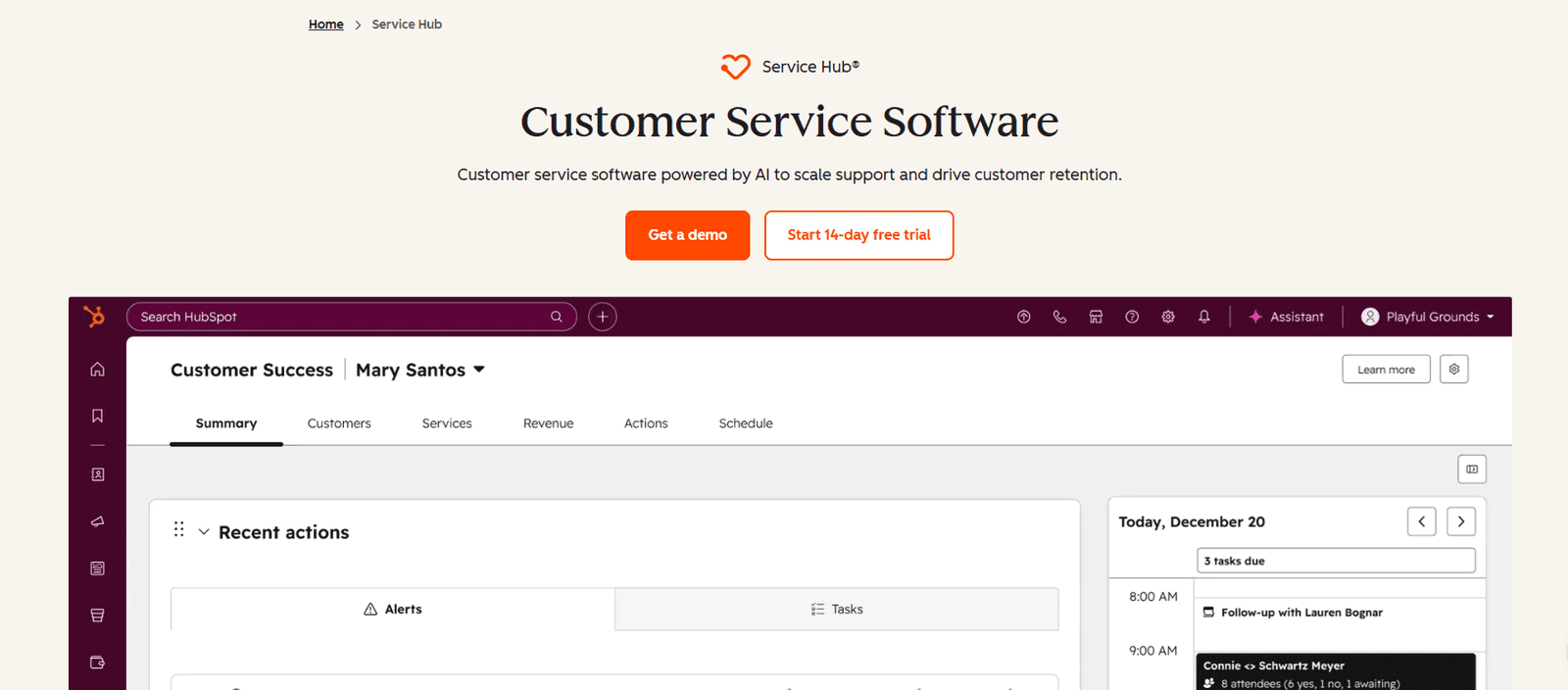
HubSpot Service Hub is a solid fit for basic health tracking if you're already living in HubSpot. Salesforce Service Cloud does the same job inside Salesforce, covering simple customer management without introducing new tools.
Choose CRM modules when consolidation matters more than bells and whistles. They're well suited to straightforward customer success motions and light-touch health tracking. When product usage data starts to matter for retention, that's your cue to graduate to a dedicated platform.
Analytics health intelligence (Accoil + product analytics)
Amplitude or PostHog support product teams with behavioral analysis and experimentation. Health intelligence tools like Accoil plug directly into Amplitude and PostHog, turning raw usage data into clear, actionable signals.
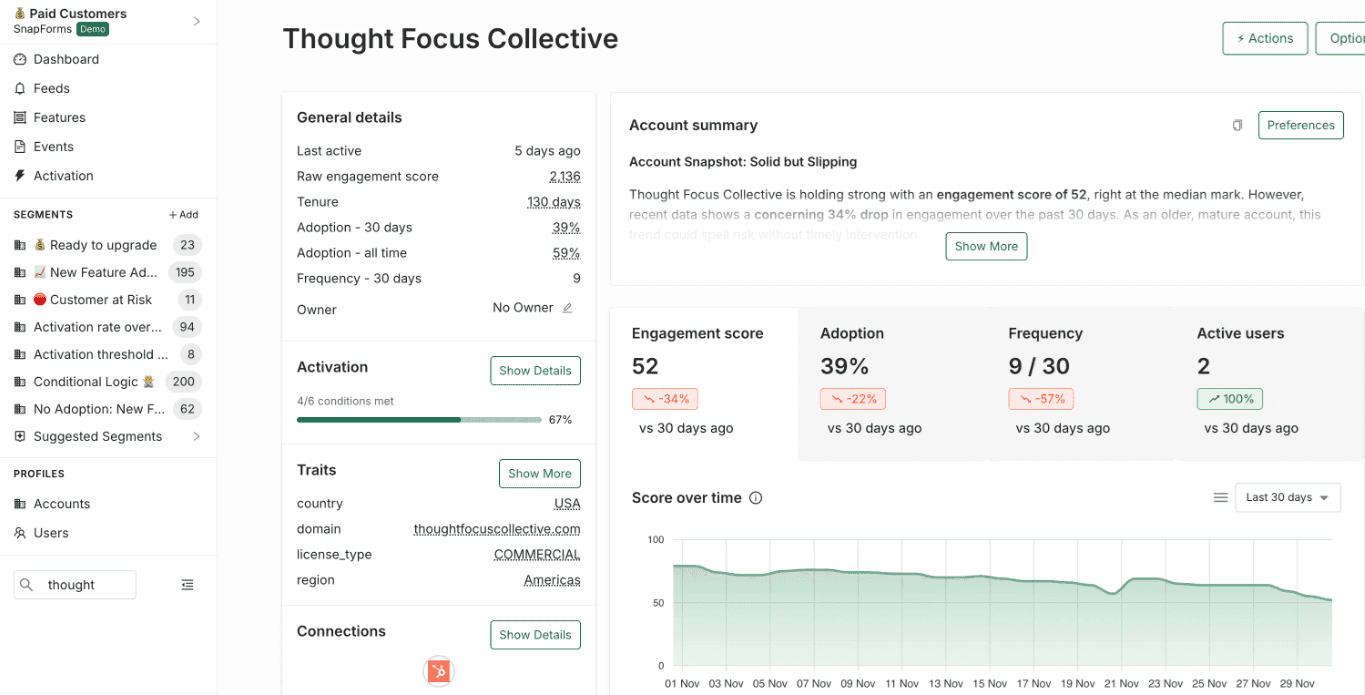
This setup keeps roles cleanly separated. Product managers stay in Amplitude digging into behavior. Customer success and sales teams get account-level health scores and risk alerts delivered straight to Slack and their CRM.
It works best when analytics are already in place and go-to-market teams need account-level visibility. If product events are instrumented in Amplitude or PostHog, adding a health intelligence layer can deliver value within hours.
Make your choice based on customer success ops capacity and budget rather than headcount. Clear, transparent pricing tends to suit budget-conscious teams far better than bespoke enterprise quotes.
Match Totango alternatives to your stage and ops capacity
| Stage | Team Size | Operations Staff | Best Fit Platforms | Typical Annual Cost |
|---|---|---|---|---|
| Enterprise | 200+ employees | Full-time team | Gainsight, ChurnZero | $50k-$200k+ |
| Mid-market | 50-200 employees | Partial or shared | Planhat, Vitally, Custify | $25k-$60k |
| Early-stage | Under 50 employees | None or founder-led | Health intelligence, CRM modules | $50/mo-$20k |
Get insights to predict churn within 48hrs
Accoil turns raw product usage into clear, timely signals so your team knows which accounts need attention today, not after weeks of configuration.
See how Accoil flags churn risk
What these platforms cost and time to value
Software license fees only tell part of the story. The real cost shows up in implementation time, day-to-day administration, and the opportunity cost of waiting too long to see what's actually happening with customer health.
Breaking down costs beyond the software license
Implementation services can quickly add thousands for platforms that need consultant-led setup. Gainsight deployments, for example, often come bundled with professional services contracts covering data mapping and health score configuration.
Platform administration also takes real, ongoing time – especially if you don't have dedicated CS Ops to tune scoring models, update automation rules, fix integrations, and onboard new team members.
Training and change management add another layer of cost when you roll new systems out to customer success teams. Your CSMs have to learn new workflows and build new daily habits.
And "affordable" only makes sense when you factor in admin time, not just license fees. A $30k annual platform that eats 10 hours a week of CS Ops time actually costs $78k once you account for a $100k operations specialist salary.
How long before you see value
Enterprise platforms typically take weeks or months to deliver value. You're mapping data, configuring systems, defining what "healthy" even means, building scoring models, designing automation playbooks, and validating everything before it goes live.
Mid-market platforms usually take one to several weeks. Tools like Vitally and Custify deploy faster than enterprise options, but you're still connecting data sources and configuring integrations before alerts become useful.
CRM modules, by contrast, work straight away, but offer far less health intelligence than specialist tools. Analytics-focused platforms can surface signals in days, once product usage data starts flowing through your existing setup.
Data prerequisites affect platform value
Customer success platforms live or die by data quality. Accurate insights depend on structured inputs: product usage data flowing through Segment, RudderStack, or direct API integrations; clean CRM data for renewal dates and contract values; and well-structured support ticket data so sentiment features work as intended.
Without properly instrumented usage data, both workflow and intelligence platforms struggle to deliver value. You can't build reliable health scores if you don't know whether customers are using core features. You can't trigger meaningful automation if engagement drops go unnoticed. These requirements apply across the category, but they sting more when you spend weeks implementing a complex platform, only to discover your product events aren't flowing correctly.
Three scenarios showing workflow platforms vs analytics health intelligence
Scenario 1: Preventing surprise churn when logins mask declining value
Workflow platform: Your account looks healthy on paper thanks to high login activity, even though power users have quietly stopped completing meaningful workflows.
Health intelligence: Weighted scoring spots the problem early – logins are up, but valuable actions from power users have dropped to zero over the last 30 days.
Key difference: Intelligence layers separate struggling power users from genuinely thriving users, even when overall engagement volumes look identical.
Business outcome: Rather than being lulled by vanity metrics, you intervene based on the quality of activity well before a cancellation email lands.
Scenario 2: Finding expansion opportunities without waiting for reports
Workflow platform: Sales asks CS Ops for a report to identify upsell-ready accounts. CS Ops adds it to the backlog. Sales checks back in… two weeks later.
Health intelligence: Sales jumps straight into the health data and immediately spots high-engagement accounts primed for expansion conversations.
Key difference: Self-service visibility with unlimited users removes reporting bottlenecks entirely.
Business outcome: Outreach happens within 24 hours, while accounts are actively exploring premium features.
Scenario 3: Getting to first value in days versus months
Workflow platform: You spend weeks mapping data, configuring health models, and designing playbooks before your first alert fires.
Health intelligence: Connect your usage data source, configure weights through a simple interface, receive Slack alerts the next day.
Key difference: Smart defaults work immediately versus a blank canvas requiring everything defined upfront.
Business outcome: Protect revenue this week while competitors spend months implementing automation that may never launch.
Spot churn risk early without the heavy lifting
Accoil shows you what's really happening inside your accounts. See who's drifting, who's expanding, and where to focus, without weeks of setup or ongoing maintenance.
See how Accoil turns usage into clear signals
Why Accoil fits better than workflow platforms
If you're an early-stage team weighing up Totango alternatives, the real question is which platform gives you clear visibility into customer health without asking for an operations function you simply don't have.
Works without operations staff
At this stage, founders or early go-to-market hires are doing customer success alongside sales, product, and ops. You're juggling customer calls, closing deals, shipping features, and keeping the lights on. There's no spare capacity for multi-week implementations, endless playbook setup, or constantly maintaining rules.
What teams actually need is clarity, now. When you've got 50 customers and three people managing them you need to know that Account X hasn't logged in for two weeks so someone who knows the customer can reach out personally.
That's where Totango and similar workflow platforms fall down. They assume you have operations capacity to maintain scoring models, update automation rules, and manage configurations as your product evolves. Early-stage teams usually don't.
Visibility without operations overhead
Accoil connects directly to Segment, RudderStack, Amplitude, and PostHog for usage data. If you're already tracking product events in these tools, setup can be completed in hours once usage tracking is instrumented through your existing analytics stack.
From there, Accoil creates health scores from your product usage data without complex configuration or consultants. Account-level health scores refresh automatically based on the last 90 days of activity, tracking activation, core feature adoption, and consistent engagement.
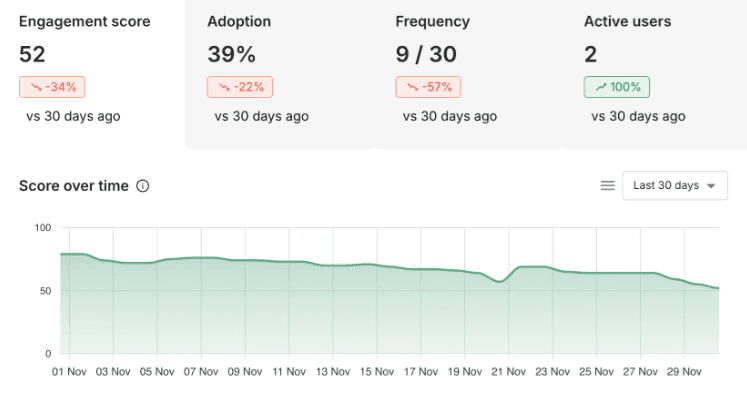
Accoil also uses AI to generate plain-language summaries that explain what changed and suggest next steps. Instead of poring over dashboards and guessing what engagement metrics mean, you get clear explanations like: "This account's power users stopped completing workflows despite logging in daily."
Automatic signals without maintenance
Ninety-day scores automatically track activation, adoption, frequency, and feature breadth across accounts. The system monitors whether new customers complete setup, whether existing customers expand usage, and whether engagement patterns begin to shift.
Churn and expansion signals push straight into Slack channels and sync to CRM fields where teams already work. Which means there's no need to log into yet another platform; the alerts come to you when attention is needed.
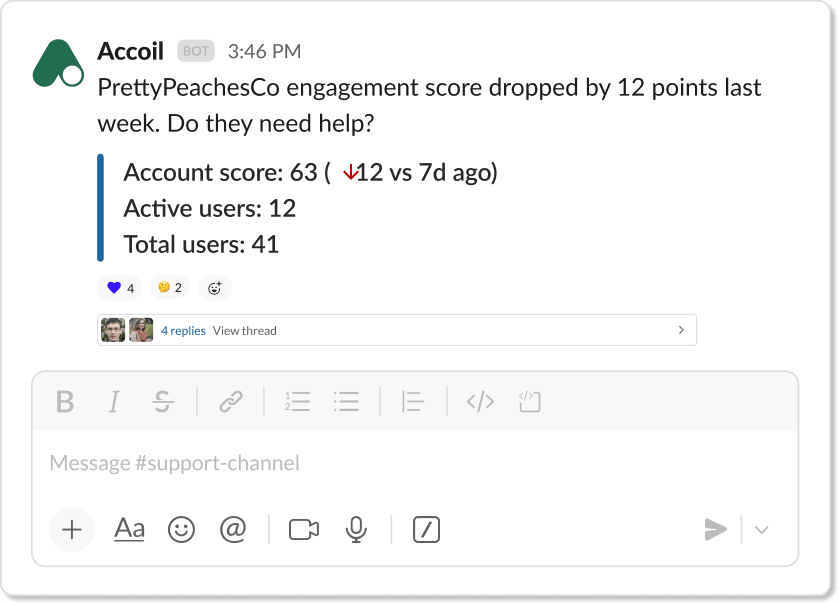
Unlimited users mean sales, product, and support can all access customer health data without per-seat fees or permission hurdles. Everyone stays aligned, without budget debates or access bottlenecks.
Accoil acts as the nervous system for your CRM, sensing changes in usage and flagging moments that need human judgment. Put simply, it tells you exactly when customers need attention, so you can respond in a way that actually fits the relationship.
Start with Accoil for immediate visibility
Your priority is to match the complexity of your tools to what you and your team can actually run today. If you're a 30-person company without CS Ops, you've got far more in common with other early-stage teams than with 30-person companies staffed with dedicated operations specialists.
At this stage, you need clear signals before you even think about automated workflows that come with ongoing upkeep. You need to know which accounts are wobbling and which are primed to grow.
What you don't need is playbook automation that demands constant configuration and tuning.
Workflow platforms like Totango and Gainsight earn their keep once you've got mature processes, dedicated CSMs, and ops support to manage the complexity. Before that moment, what matters is knowing which customers need attention today, with minimal operational overhead.
So, be good to yourself and your bottom line. If you're tracking usage via a tool already, plug your existing product analytics into Accoil to skip months of workflow automation and start protecting revenue in days.