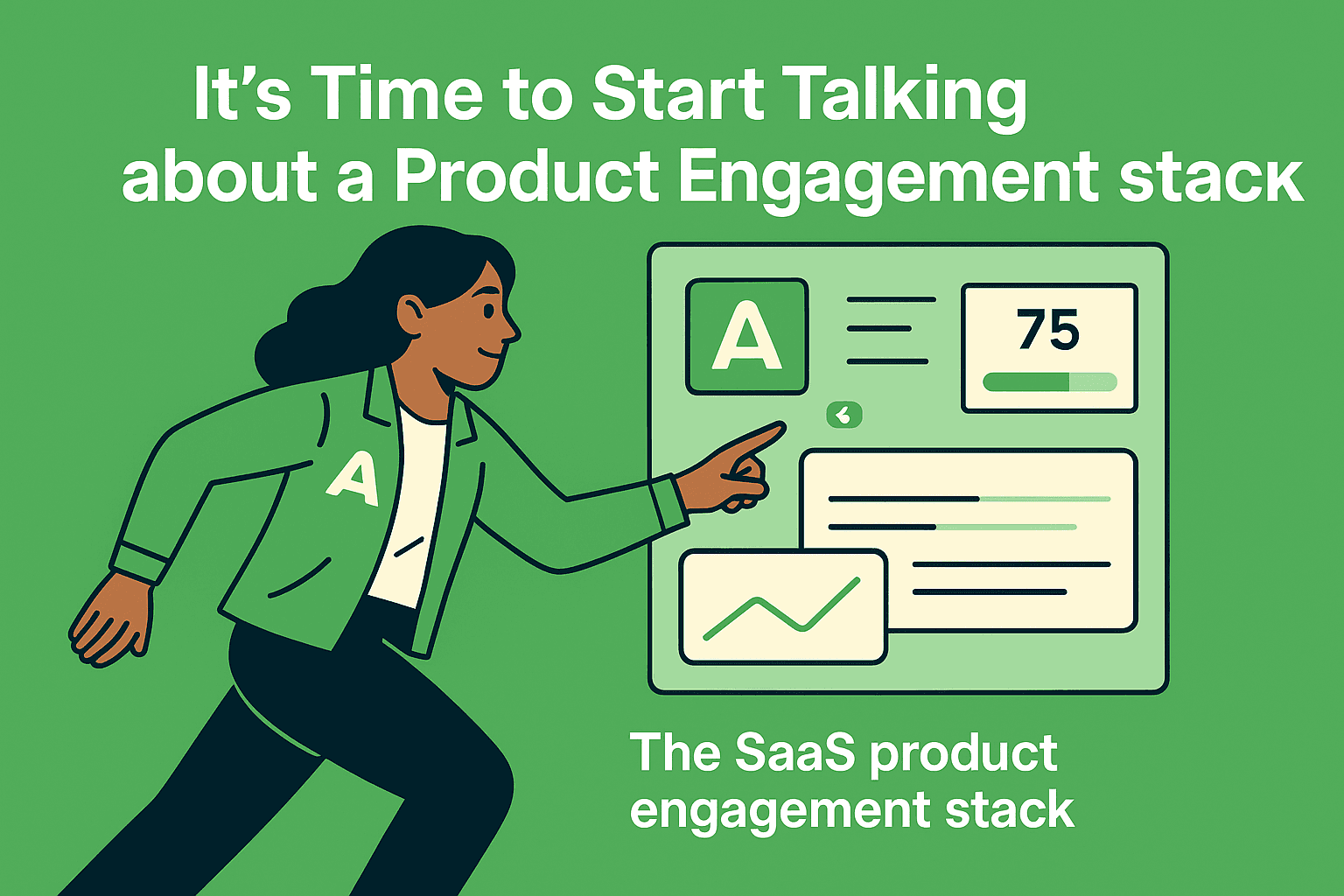

The SaaS product engagement stack
The software business has officially entered the age of engagement. So why aren't more SaaS companies building a product engagement stack?
A product engagement stack is simply the set of tools you use to see who uses your product, when they use it, and which features they love. Without steady engagement, there's no activation, no retention and, frankly, no business.
The growing importance of the product engagement stack
Why now? Here are five reasons:
Reason #1: Engagement is the lifeblood of your SaaS business
SaaS runs on subscriptions. If your product stops delivering value, customers walk away. Continuous engagement is your most fundamental KPI—no engagement, no customers, no revenue.
Reason #2: Keeping users engaged is harder than ever
Your customers have infinite options and low switching costs. New tools pop up daily on sites like Product Hunt. To keep pace, you must work smarter, get creative and build a better experience.
Reason #3: Engagement is everyone's job
Product engagement isn't owned by a single team. Marketing, product, customer success and even support all play a part. You need a stack of tools that ties these functions together.
Reason #4: Engagement involves many jobs-to-be-done
You must:
- Build an engaging product
- Activate new users (onboarding)
- Teach existing features
- Drive adoption of new features
- Gather user feedback
- Manage support requests
- Run proactive customer-success programs
Each of those jobs breaks down into tasks like in-app guidance, onboarding emails, help docs and high-touch support. You'll also need to track activation and engagement metrics to know what's working.
Reason #5: The engagement tool ecosystem is now mature
A few years ago, solutions were patchy and niche. Today, specialised tools exist for every piece of the engagement puzzle. It's time to bring them together into one coherent stack.
What's next?
Start organising your engagement tools around three core needs:
-
Drive engagement messaging programs — Messaging guides new users, announces features and keeps users coming back. You'll likely need tools for email, in-app prompts, SMS and more.
-
Manage customer support / CS programs — Even self-serve products need human support. A strong customer-success team ensures proper implementation, activation and growth over time.
-
Understand product engagement — You can't improve what you can't measure. Regularly ask:
- Who are my most and least engaged users?
- Which accounts are stalled or growing?
- Which features drive engagement?
These insights predict churn, conversions and upsell opportunities.
We need to start talking about the product engagement stack
Keeping your users engaged is one of the toughest challenges in SaaS. The practice has grown more complex, and the tool market has never been stronger. It's time to plan your product engagement stack and keep your business thriving.