
This is part 1 of a 2-part series on product engagement segments for your SaaS business.
Segmentation helps you target your messages and spot product trends. When you bucket people by how they use your product, you can boost ROI, tune features and uncover gaps. In short, if you want to get the most out of your data, you need to segment it.
Another way to slice your audience is by product engagement. These segments aren't about firmographics or website visits. They're about how people use your product. Every SaaS business has its quirks, but there are some standard engagement segments you should track and act on.
Some questions to ask when setting up your product engagement segments
What actions are these people taking? What are they using?
There are many things someone might do in your product. Some actions are more valuable than others. For example, logging in is common but not always telling. Creating a report usually shows more value.
Some of these key events help a user reach first value. You might bucket those users into an Activated segment for your Sales team.
Where are they in the customer journey?
Note: We're focusing here on customers in the trial phase, the ones your Sales team cares about.
Trial? Onboarding? Growth? The SaaS sales cycle isn't one-and-done. To thrive, you must both acquire and retain customers.
Keep your Sales team focused with product engagement segments during the trial phase
Too many leads isn't a bad problem, but it can overwhelm your Sales team. Engagement segments during the trial phase help you weed through trial accounts to find the ones most likely to convert.
1. New Trial Accounts
For most SaaS businesses, this segment is where it all begins. It's the focus of your inside Sales team.
Who goes here? Any account that signed up in the last X days (usually a fraction of your trial period).
What to do? Send this list to your Sales team via Slack, CRM or email. Then step back. Let these users explore your product before you reach out.
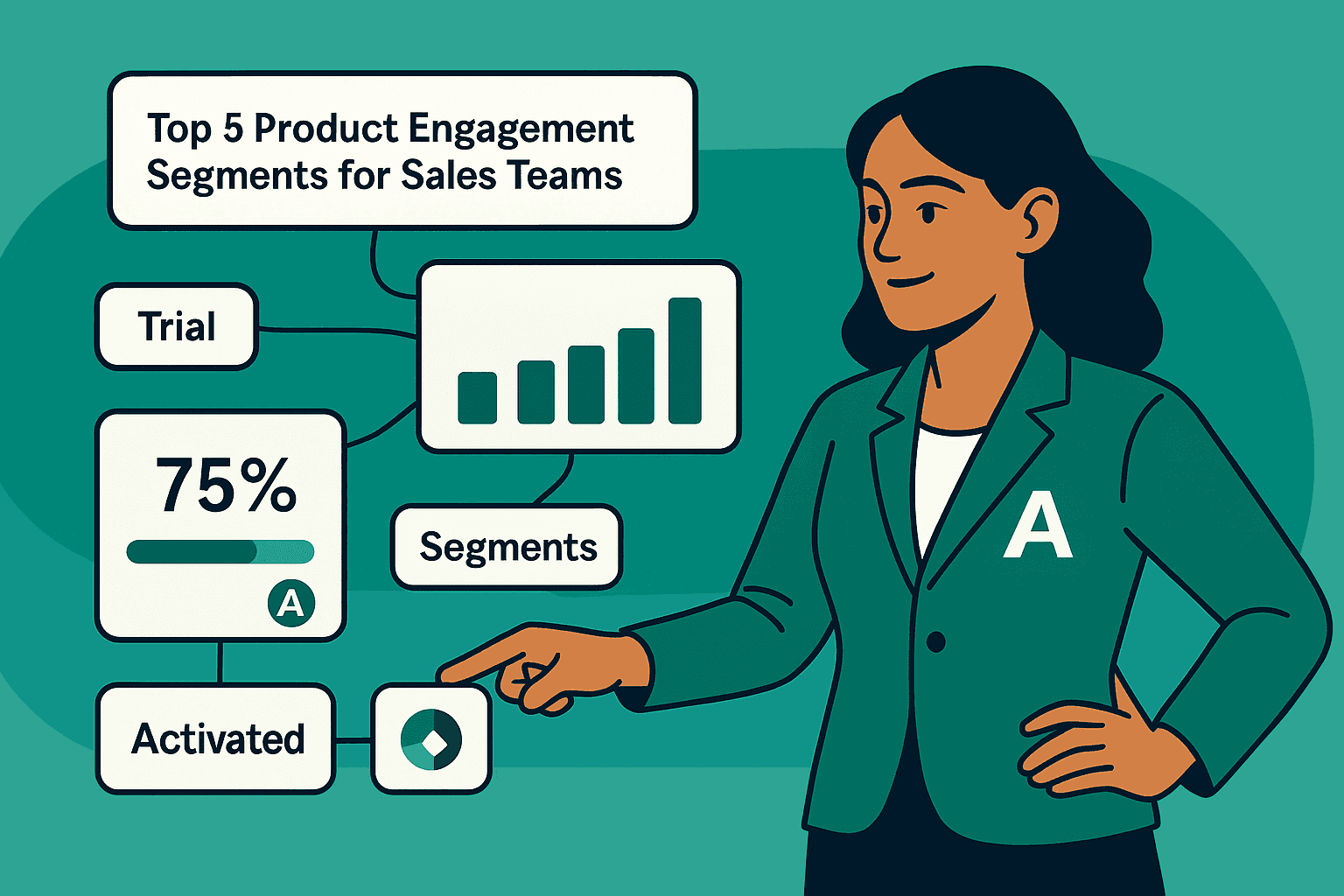
2. Activated Trials (Product Qualified Leads)
Every try-before-you-buy model needs this segment. Tracking new accounts is good, but tracking when they hit first value is even better.
Why is this important? These leads convert at roughly 25–30%.
Who goes here? Any account that completes your Activation checklist during the trial.
What to do? Tag these in your CRM. Set up alerts so Sales gets notified when an account becomes Activated. These are your highest-priority leads.
3. "Red Hot" Trials
Static Activated or not-Activated states are helpful, but you also want to spot surges in engagement.
What is "Red Hot"? Accounts that hit first value and then boost engagement significantly.
What to do? Tag these accounts in your CRM and check in while they're most interested.
4. Soon to Expire Trials
Your trial period creates urgency. As trials near their end, your Sales team should contact decision makers for one last push.
What to do? Tag these accounts in your CRM and set up alerts for when they enter this segment. Sort by Activation rate so you focus on the trials most likely to convert.
5. Activated Trials, Not Converted 30/60/90 Days Ago
These accounts left the trial without buying, but they saw enough value to get Activated.
Why is this important? About half of conversions can happen after a trial ends.
What to do? Send these accounts to your nurturing campaigns. Include them in product update emails. Have Sales follow up every 6–12 weeks with new features or relevant references. Don't give up on them—timing is everything.
Go get 'em.